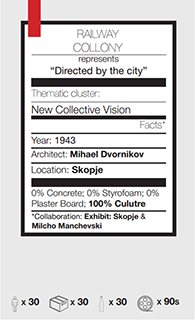
City: Skopje, Macedonia
Thematic Cluster: Recyled Architecture
Topic: Directed by the City
Collaborators: Residents from Railway Colony, BIMAS, Milcho Manchevski
Sponsors: BIMAS, McCAAN, SKOPSKO
A brief explanation of the location Thematic Cluster: Recyled Architecture
Topic: Directed by the City
Collaborators: Residents from Railway Colony, BIMAS, Milcho Manchevski
Sponsors: BIMAS, McCAAN, SKOPSKO
During the 20th century in response to the accelerated urbanization occurs the need for a new type of housing, designed to accommodate a category of people that is employed in the newly emerging industries.
During the 30s and 40s of the last century, in Skopje, there is a wave of immigration from the USSR, which is called “white immigration”. As a result of political and economic conditions in former Russia, this wave of intellectuals inhabited the whole region of the Balkan Peninsula. In such circumstances, this immigration conducted number of architects and academics who contributed to the exchange of knowledge and new qualities in urban living.
One of the members of the above motion is Architect Mihael Dvornik that after migrating in Skopje worked as an architect. “Colony neighborhood”, assisted a need for accommodation of employees of the railroad. The architect imagined the concept as a "micro city" in which housing is accompanied by innovative social program that aimed to offer higher quality housing and life in it. The building witnessed the devastating earthquake in 1963 and run with minimal damage.
Today, while Skopje witnesses general political, economic and cultural weakness, resembles a need for revisiting the already established values of urban living. Therefore, Exhibit: Skopje believes that this project has the potential to address global actualities in multiple domains.
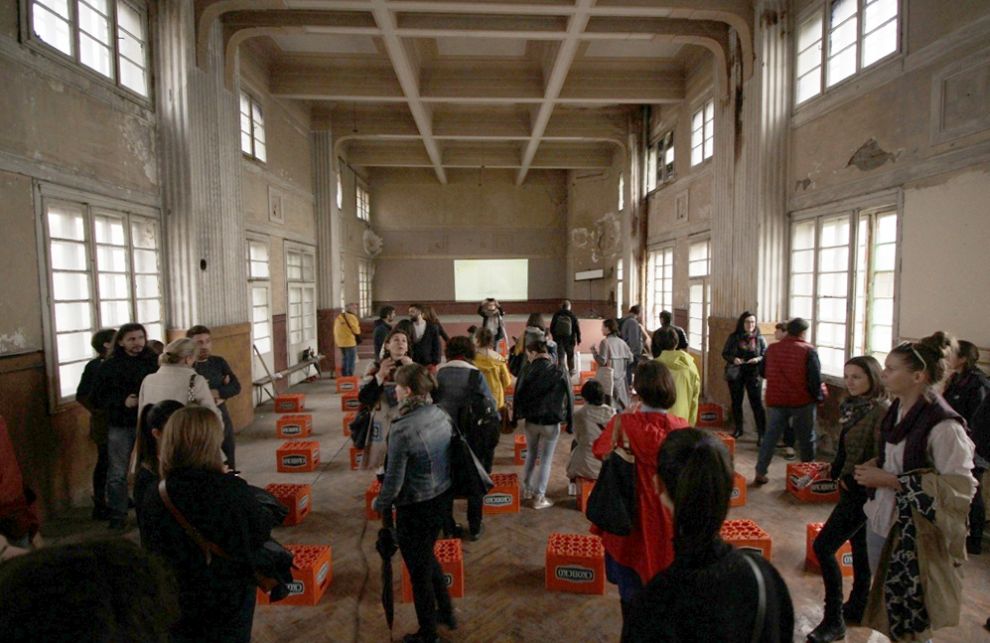
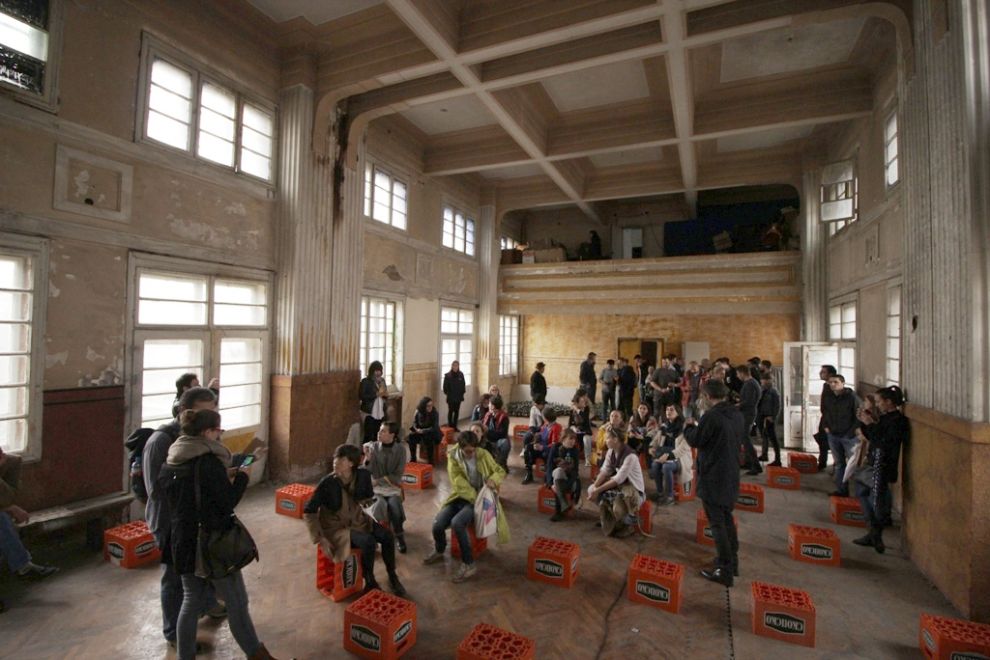
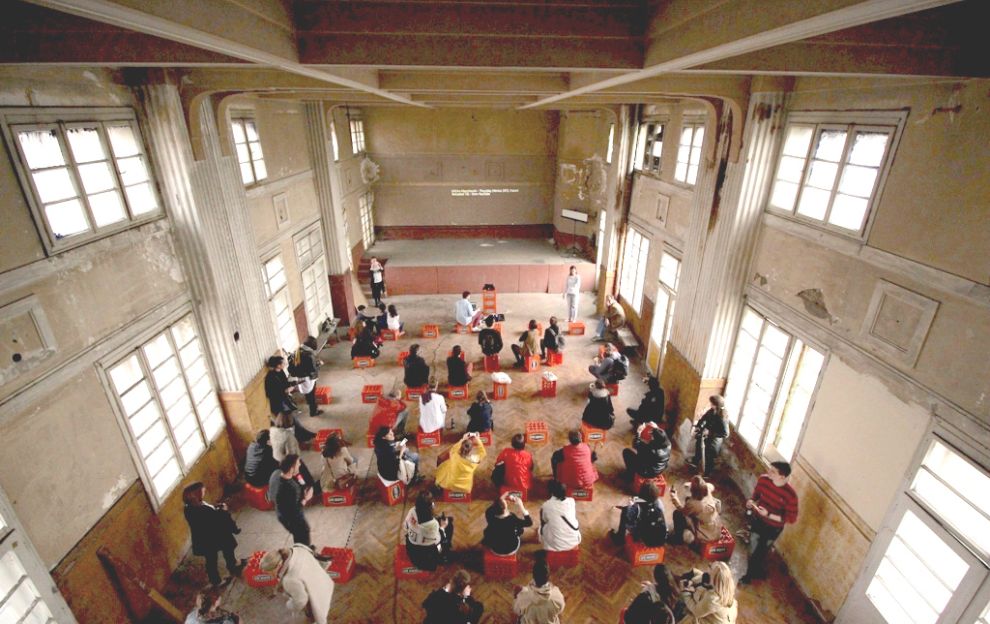
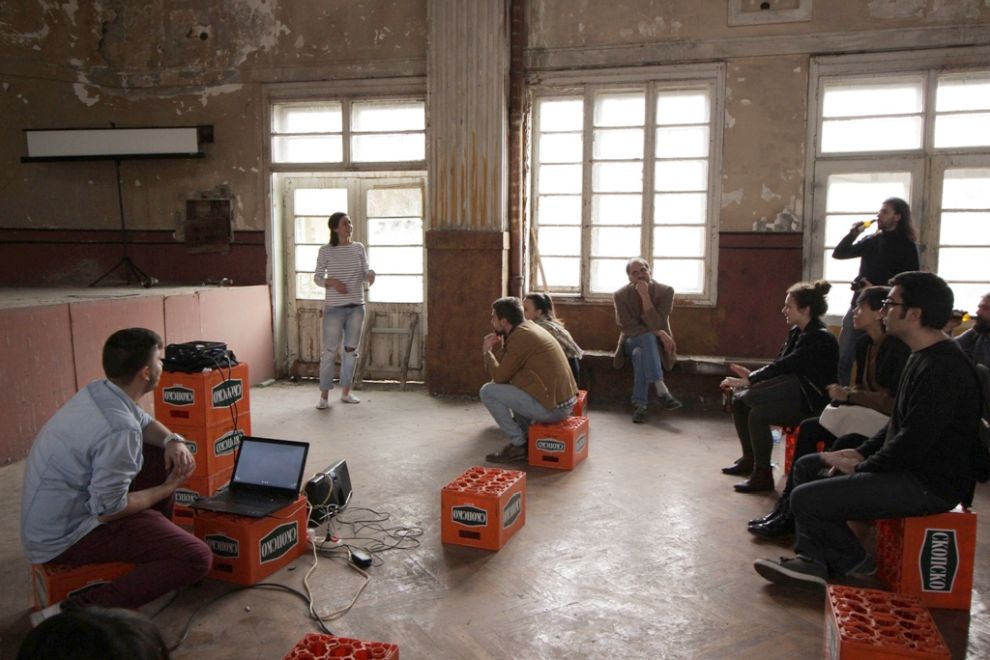
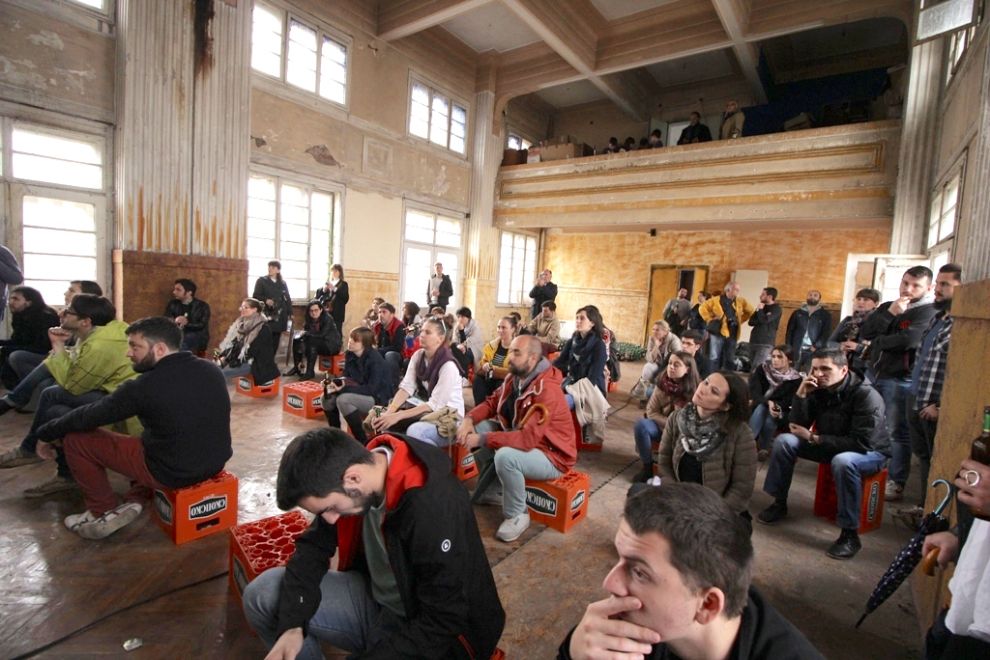
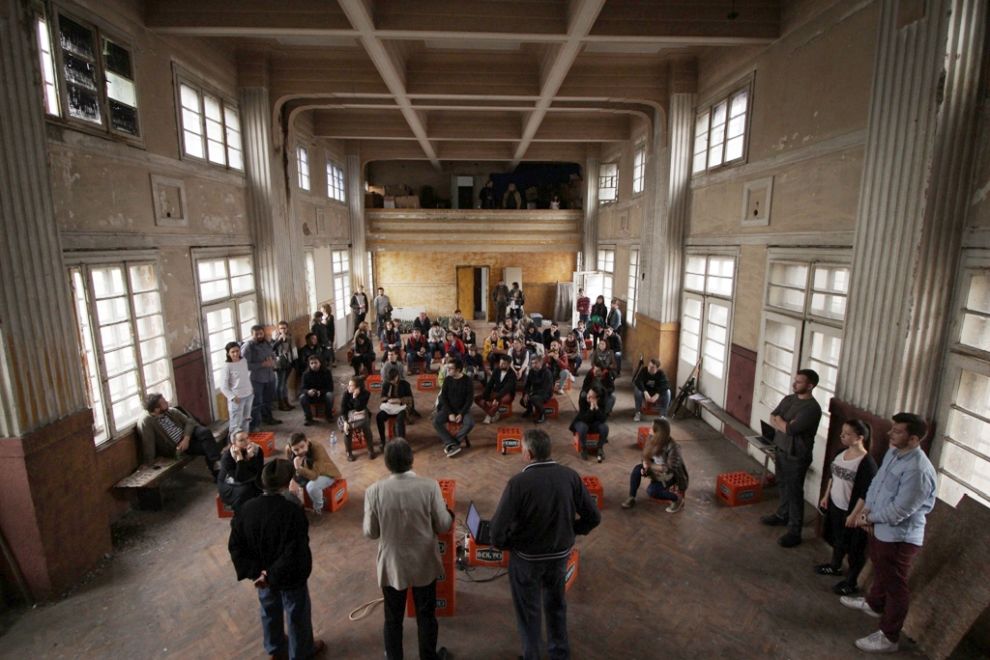
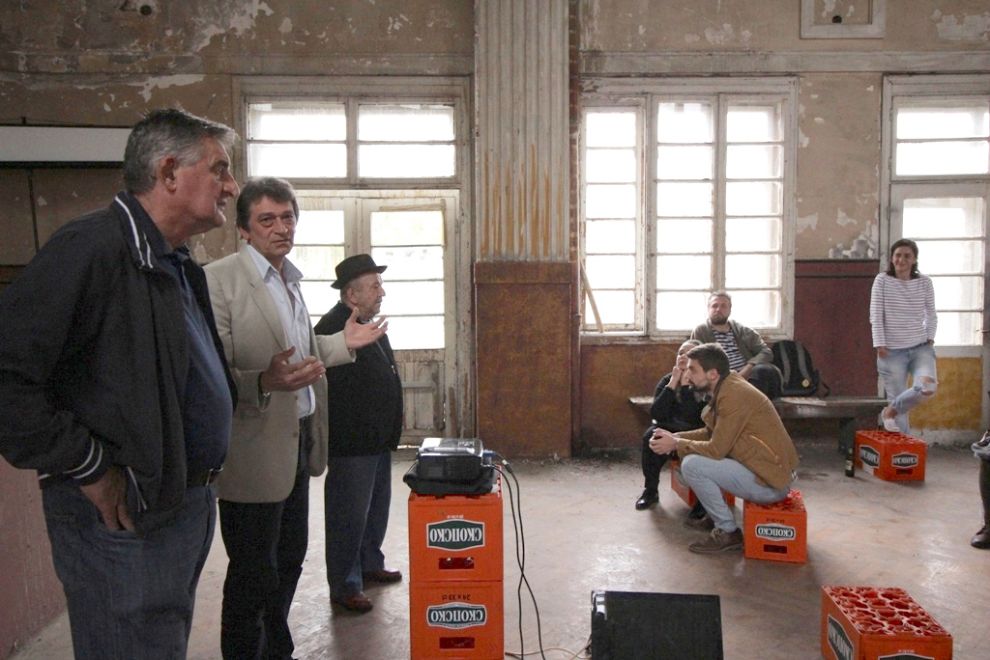
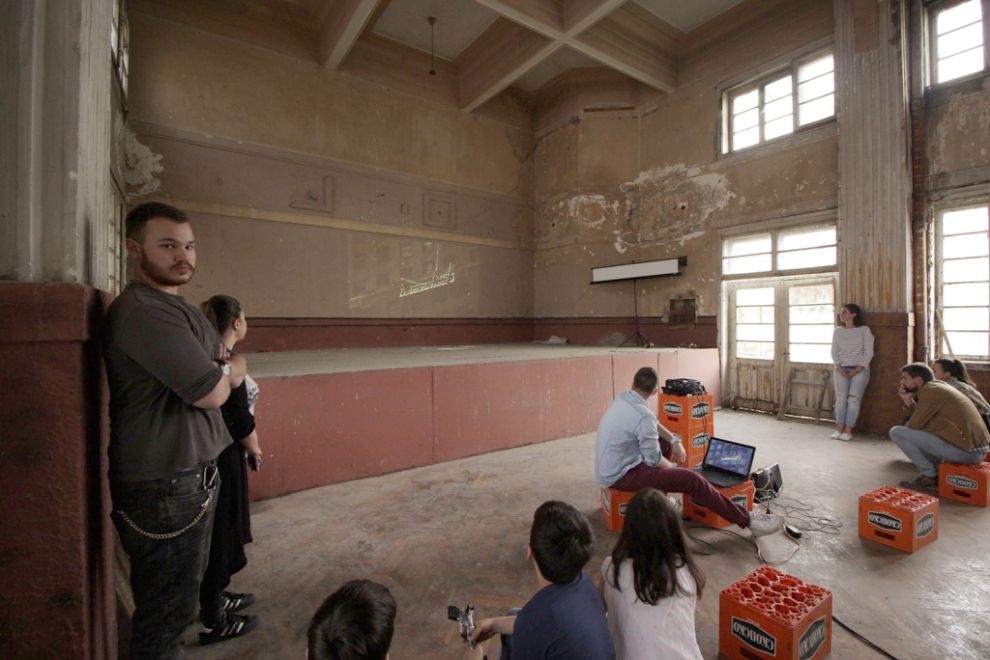
Skopje, 2016: became a city that undoubtedly loses its original thought and values for creating a common space. This problem does not come from a single isolated fact. It comes from a number of circumstances that have emerged in the last 25 years and even before, where the power of community space in the city is constantly devalued. “Colony neighborhood” - architectural cult product and just one of the many voiceless architectural witnesses exhibits the most tangible picture of this urban phenomenon. Therefore, it could become an important study that might open the possibility to explore and understand the urban structure of a Skopje`s neighborhood, or in a broader context - the City of Skopje.
We can not predict the future, but we can create it.
Starting from the study conducted in this building as well as the experiences of the people living there we have the opportunity to learn how to create a joint collective future for the city.
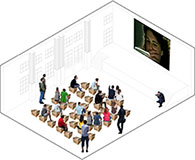
This building reflects an example how one can design the spaces of social character as a supplement to everyday life for which we can responsibly argue that today are increasingly abandoned. The architect of this social housing block, even envisioned a cinema in the core of his work as a norm for urban living. The film, even though representing a different medium of visual communication that architecture in broader cultural sense brings the same values within. It aims to provoke a discussion, trigger emotions, offer experience, analyze characters and stands as an educator.
Through this approach, Exhibit: Skopje tries through a performative act to symbolically address the architect as a director of a city. Hence, how the today’s urban structure of Skopje impacts its citizens? Which urban scenarios could have been directed through its collective consciousness? Skopje, a city that is built by the books of an international script in which the topic of global solidarity is being elaborated. Just like the movie "Thursday" from Milcho Manchevski examined the topic of "cinema of the future", Exhibit: Skopje poses the question what is the kind of future we want to create for Skopje.